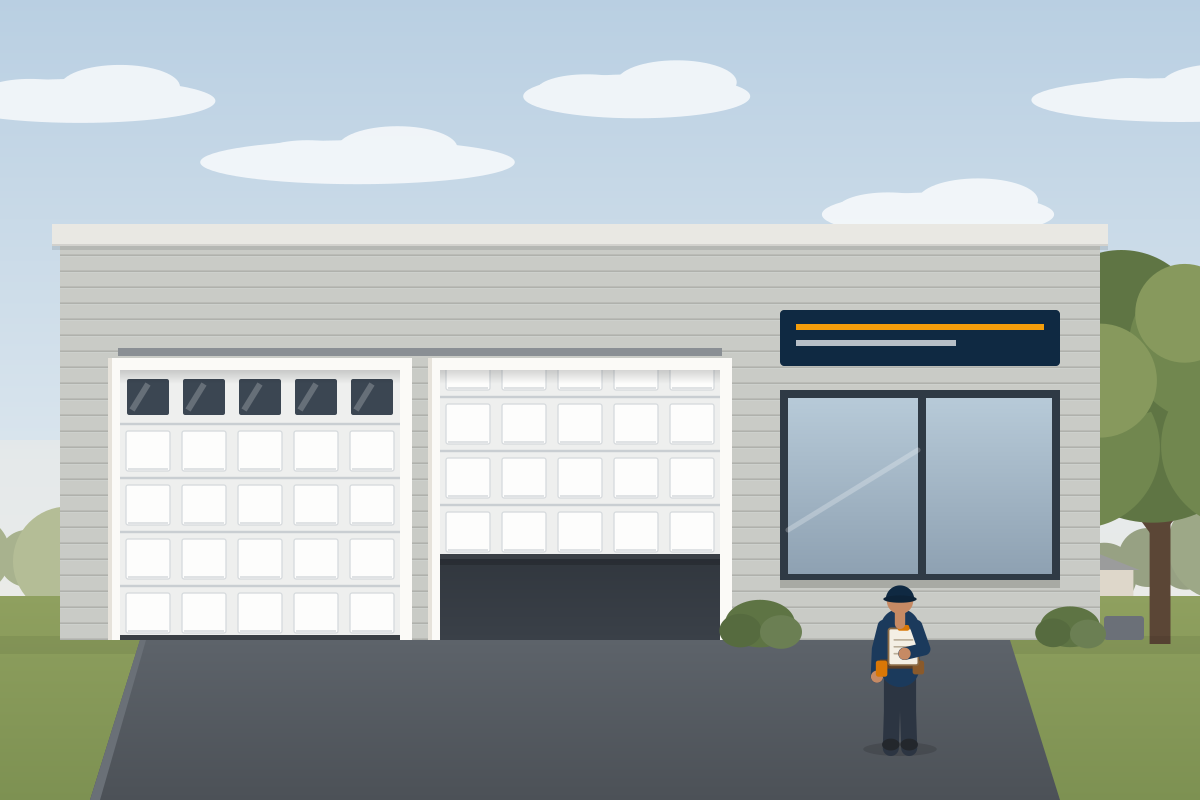
Commercial Door Systems We Can Help With
One call covers the door types most local businesses rely on:
Overhead Sectional Doors
Insulated or non-insulated steel sections on tracks, common for shop bays and warehouse openings. Repairs include springs, cables, rollers, hinges, panels and track alignment.
Rolling (Coiling) Steel Doors
Interlocking slats that roll up into a hood above the opening, often used on storefronts and storage areas. Service covers bent or jammed curtains, guides, barrels and operator connections.
Commercial Operators
Heavy-duty motors and controls that run business doors. Technicians troubleshoot limit settings, gear and brake wear, control wiring, remote receivers and safety devices.
Who This Page Is For
- Shops and service bays that need vehicle-height doors to open reliably every day.
- Warehouses and storage buildings with large sectional or rolling steel doors.
- Storefronts and small businesses that close a rolling steel door at night.
- Property managers who need a single point of contact for several buildings.
We cover the door and operator itself. Loading dock equipment such as dock levelers is outside our scope.
Repair and Installation for Businesses
Independent technicians connected through our service can repair a failing door or install a new commercial overhead or rolling door when repair no longer makes sense. During a visit they typically:
- Inspect the Whole System: Door sections or curtain, springs, cables, rollers, tracks or guides, and the operator are checked together, not one part at a time.
- Explain Repair and Replacement Options: You hear what is worn, what is failing and what is safe to leave for later, before work starts.
- Complete the Work: Parts are replaced or a new door is installed and aligned to the opening.
- Test Safety Devices: Reversing edges, photo-eyes and operator limits are tested before the door is returned to service.
When to Call for Commercial Door Service
- The door will not open or will not close fully at the end of the day.
- The curtain or panels are dented, buckled or running off the track.
- The operator is humming, grinding or tripping its limits.
- A spring has broken or cables are loose.
- A vehicle has struck the door or its frame.
Need help at home instead? See residential garage door repair, or read about spring repair and replacement, which applies to many business doors as well.